
AI-Focused Law Firm Seeks to Buy Assets From Collapsing Wall Street Law Firm

15-minute, 28-second read.
This Week:
- McDonald's CEO faces questions from Congress over AI-powered menu prices
- Legal tech only works if people actually use it
- EU court adviser warns Google's Gemini could break copyright laws by reusing news articles
- Hollywood backs The New York Times in major AI copyright fight against OpenAI and Microsoft
- Apple’s App Store battle with Epic Games heads to the Supreme Court
- Runway AI faces lawsuit over allegedly scraping YouTube videos to train AI
- Ninth Circuit rules that hidden website terms cannot force customers into arbitration
- Federal appeals court rejects Kalshi and Coinbase’s requests for protection from state gambling regulators
- Court allows environmental lawsuit against Elon Musk's xAI to continue
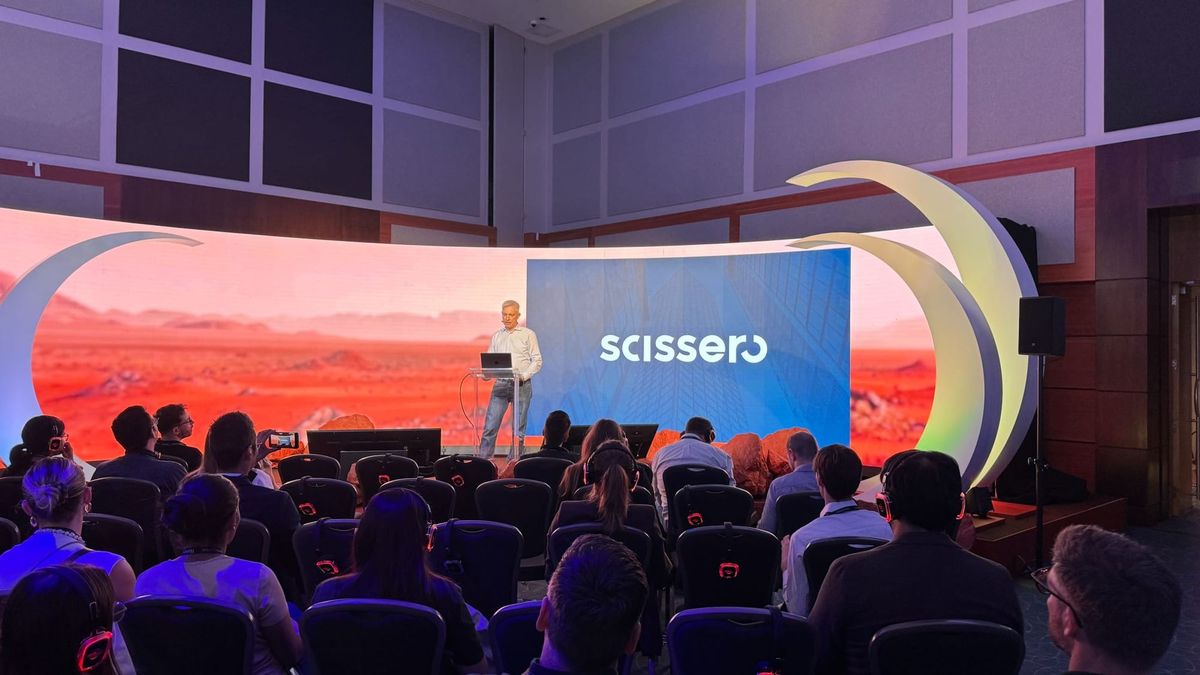
- AI-focused law firm seeks to buy assets from collapsing Wall Street law firm
McDonald's CEO Faces Questions From Congress Over AI-Powered Menu Prices
McDonald's CEO Chris Kempczinski is getting some uncomfortable questions from Congress, and AI is right in the middle of it.
Five U.S. lawmakers, including Senator Elizabeth Warren, want to know whether McDonald's is using AI to recommend menu prices that leave customers paying more.
The system analyzes sales data and suggests what individual restaurants should charge.
Lawmakers worry it could also help McDonald's locations coordinate prices instead of competing, deciding how much to charge for a Big Mac now requires a computer smarter than the person buying it.
The CEO has until November 16 to explain what's happening.
McDonald's says franchise owners control their own prices and are free to ignore the AI recommendations.
But three franchise owners reportedly said the system had increased price differences between nearby locations, and customers have already filed lawsuits accusing the company of coordinating prices illegally.
None of those claims has been proven in court.
The bigger question is whether AI is helping businesses price smarter or making it easier for competitors to stop competing.
You're running a company, your competitors use the same pricing technology, and everyone starts charging similar prices.
Is that smart business or a potential antitrust lawsuit waiting to happen?
Legal Tech Only Works If People Actually Use It

Most tech implementations fail for the same reason: the business won’t buy into it.
Summize works inside the tools your teams already use, including Outlook, Slack, Teams, Word, Salesforce and more.
Sales requests an NDA in Slack. Lawyers review in Word. Nobody has to learn a new system.
Every request, approval and signed agreement flows back into one contract intelligence system.
The business moves faster. Legal gets visibility and control.
See the power behind every great legal team in action.
EU Court Adviser Warns Google's Gemini Could Break Copyright Laws by Reusing News Articles
Google's AI chatbot, Gemini, is facing a serious copyright question in Europe.
On November 3, a legal adviser to the European Union's top court warned that Google could be breaking copyright rules when Gemini uses news articles to answer people's questions.
A Hungarian news publisher took Google to court over how its content was used.
The concern?
A publisher pays journalists to investigate, write, and publish stories, then an AI chatbot gives readers the answers without them ever visiting the news website.
That's like doing all the cooking, paying for the groceries, and watching someone else open a restaurant with your food.
Google says Gemini creates original answers instead of copying articles. But if readers get everything they need from AI, who's going to pay the people doing the actual reporting?
The legal adviser made one big distinction, using articles to train AI is not the same as copying protected parts of those articles in chatbot answers.
Under certain EU rules, AI training can be allowed, but reproducing copyrighted writing without permission can cross the line. And before Google's lawyers start packing their bags, the adviser hasn't ruled against Google.
His opinion isn't binding, and the court still has to make its final decision.
But the stakes go beyond Google.
Companies building AI tools, publishers protecting their work, and businesses using AI-generated content all have something to watch.
If your company's expensive research showed up in someone else's chatbot tomorrow, would you call it innovation or ask where your check went?
Hollywood Backs The New York Times in Major AI Copyright Fight Against OpenAI and Microsoft
Hollywood has joined The New York Times in its copyright fight against OpenAI and Microsoft, and things are getting expensive.
Groups representing actors, writers, musicians, and news publishers have filed legal papers supporting the newspaper. The Times says OpenAI and Microsoft used its articles to train AI without permission or payment.
OpenAI and Microsoft argue that using copyrighted material to train AI can be legal under a rule called fair use. Hollywood isn't buying that argument.
Its message is simple: You can't just take someone's work, build a billion-dollar business with it, and act shocked when they ask for a check.
The groups want courts to recognize the importance of paying creators for their work. But these are legal arguments, not court findings. Nobody has won this fight yet.
The bigger question is who ends up paying if AI companies are forced to buy licenses for copyrighted content.
AI developers could face huge new costs, businesses could pay more for AI tools, and legal teams could spend more time negotiating contracts than actually using the technology.
Picture your company spending millions on AI, only to discover that the bill for feeding it just showed up. Another expense for the budget your CFO already thinks is a work of fiction.
For creators, licensing could mean getting paid for work that helps power AI products.
For smaller AI startups, it could mean competing against giants that can afford expensive deals.
If the courts require AI companies to pay for training data, would your company absorb the extra costs, pass them to customers, or rethink its AI spending?
Apple’s App Store Battle With Epic Games Heads to the Supreme Court
Apple is heading to the U.S. Supreme Court on January 11, 2027, over a fight with Epic Games, the company behind Fortnite.
It all started when a judge ordered Apple to let app developers send customers to cheaper payment options outside the App Store. Apple allowed the links, then introduced fees of up to 27% on certain outside purchases.
Epic argued that Apple was breaking the court's order, and a judge agreed, finding Apple in contempt in April 2025. That's a pretty impressive business move: get told to open the door, open it an inch, then charge people for walking through it.
An appeals court upheld the contempt finding but rejected a total ban on Apple's outside-payment commissions, now Apple wants the Supreme Court to overturn that finding.
The bigger fight is about who gets to control your money after you've built a business on someone else's platform.
Apple argues that companies shouldn't be punished for breaking rules a court order didn't clearly spell out.
Epic argues that Apple used new fees to defeat the very order it was supposed to follow.
Suppose you're running a successful app, bringing in thousands of paying customers, and then discovering that the platform wants a cut even when those customers pay somewhere else.
Your business is growing, but who really owns the checkout counter?
The Supreme Court isn't deciding the entire App Store fight again, it's deciding whether Apple was legally in contempt. That answer could change how courts enforce orders against powerful companies.
If your business depended on Apple's platform, would you call those fees fair business or a toll booth with a trillion-dollar attitude?
Runway AI Faces Lawsuit Over Allegedly Scraping YouTube Videos to Train AI
Runway AI, a company that makes AI-generated videos, is facing a lawsuit over claims that it took YouTube videos without permission to train its AI.
Two content creators say Runway got around YouTube's security protections and downloaded at least 1,590 of their videos combined, they claim this cost them money and control over their work.
Runway argued that the videos were already public, but a federal judge refused to dismiss the case. The judge has not ruled that Runway broke the law.
That's the funny thing about the internet.
You can watch a video for free, but that doesn't mean you can take the whole library home and start your own Hollywood studio. By that logic, your neighbor's car is parked outside, so why not borrow it forever?
If your AI vendor trained its models on content it had no right to collect, could your company end up paying for someone else's shortcuts?
That doesn't automatically make customers liable, but it raises serious questions about training data, copyright protection, and legal costs.
AI companies want to build faster, creators want control over their work, and businesses want powerful tools without a lawsuit showing up like an unpaid credit card bill.
If your legal team asked where your AI vendor got its training data, could you give them a clear answer?
Ninth Circuit Rules That Hidden Website Terms Cannot Force Customers Into Arbitration
Rugs.com just learned that hiding legal terms on a website doesn't mean customers agreed to them.
Two shoppers sued the online rug store, claiming it advertised a Memorial Day sale as ending soon, then kept the sale going for days.
Rugs.com wanted the dispute handled through private arbitration instead of court, pointing to legal terms on its website. Sounds like a clever escape plan, right?
Just one tiny problem, the customers never clearly agreed to those terms.
On October 28, a federal appeals court sided with the customers on that issue.
The court said entering an email address and clicking "Join Now" didn't mean accepting a legal agreement nobody clearly asked them to accept.
Turns out a hidden link isn't a magic button that makes lawsuits disappear.
Take a look at your own company's website. Got a beautiful signup form, a tiny Terms of Use link, and an arbitration clause your legal team spent three weeks perfecting?
Great.
Can you actually prove customers agreed to it? That's the question this ruling raises for businesses, the court made clear that customers need proper notice of online terms and must take an action that shows they agree.
It didn't ban arbitration clauses or decide whether Rugs.com misled shoppers about its sale, but it did leave the company facing the lawsuit in court rather than forcing the customers into arbitration.
If your company faced the same challenge tomorrow, would your legal team have proof of agreement, or just a very expensive explanation for why nobody noticed the fine print?
Federal Appeals Court Rejects Kalshi and Coinbase’s Requests for Protection From State Gambling Regulators
Kalshi and Coinbase just got a rude wake-up call from a federal appeals court. On November 3, three judges refused to temporarily protect the companies from state gambling regulators in New York and Connecticut.
Both companies let people trade contracts based on sports results, like betting on who wins a football game. But they argue these are financial products regulated by the federal government, not regular sports bets controlled by states.
State regulators aren't buying it. To them, calling a sports bet a financial contract is like putting a necktie on a casino dealer and calling him a Wall Street banker.
Nice suit, buddy.
Same game.
Kalshi and Coinbase wanted the court to block state regulators from taking action until their legal fights are settled, the judges said no. That leaves both companies facing possible state enforcement, even as they fight to prove their products are legal.
The real fight is much bigger than football bets.
Kalshi and Coinbase argue that federal rules should protect their businesses from different gambling laws in all 50 states.
State regulators argue that federal oversight doesn't give companies a free pass to ignore local gambling restrictions, the judges haven't decided who's right.
They only refused to give the companies temporary protection.
But put yourself in the shoes of a CEO who just spent millions building a product, hired a legal team, and got federal approval to operate, only to discover that individual states can still challenge what you're selling.
That's one expensive headache.
For legal teams watching this case, the question is simple:
If the federal government regulates your business, should a state still be able to stop you from selling your products? And if your company were next, would your legal team be ready?
Court Allows Environmental Lawsuit Against Elon Musk's xAI to Continue
Elon Musk's AI company, xAI, just lost its first big fight in an environmental lawsuit, and this one has nothing to do with chatbots stealing your job.
The NAACP, a US civil rights group that fights racial discrimination, sued xAI over a gas-powered electricity plant in Mississippi that helps power its massive AI data center.
The group says xAI operated dozens of gas turbines without the required air pollution permits, putting nearby communities at risk.
xAI argued that the turbines were mobile equipment and didn't need those permits. But on October 30, a federal judge rejected that argument and refused to throw out the case.
Turns out calling something mobile doesn't automatically make environmental rules disappear. Who knew? The lawsuit continues, and xAI has not been found liable.
For legal teams, this is the kind of headache that doesn't disappear after one meeting with the CEO.
Your company spends millions building the next big AI system, your engineers get excited about faster computers, and suddenly your lawyers are explaining why the local power plant is in federal court.
The NAACP wants xAI held accountable for alleged pollution violations, and xAI still has the chance to defend itself.
The bigger issue reaches far beyond Musk.
AI companies need enormous amounts of electricity, and the facilities supplying that power can bring environmental lawsuits, regulatory scrutiny, and expensive legal battles.
You can have the smartest AI engineers on Earth, but if your infrastructure breaks environmental laws, your chatbot isn't going to talk the judge out of it.
AI-Focused Law Firm Seeks to Buy Assets From Collapsing Wall Street Law Firm
An AI-focused law firm is looking to raise money from private equity investors as one of America's biggest law firms faces a possible shutdown.
Scissero Law is talking with several investment firms about funding its growth and wants to hire lawyers from Weil, Gotshal & Manges, a major US law firm that has been losing senior lawyers.
Scissero is also interested in Weil's legal technology and data to improve its AI tools.
That's quite a shopping trip.
One firm is fighting to keep its doors open, and another is checking out the furniture, computers, and employees.
After nearly 95 years in business, Weil is facing a possible closure as lawyers leave for competing firms.
No investment deal or acquisition has been completed.
The bigger question is what happens to your legal bills when AI can review contracts, prepare documents, and handle hours of legal work much faster.
Big law firms have traditionally charged corporate clients based on how many hours their lawyers work.
Your lawyer spends six hours reviewing a contract, and your company gets a bill big enough to make the finance team request medical attention.
AI-focused firms want to change that model by using technology to complete routine work faster, but faster service doesn't guarantee cheaper bills.
Experienced lawyers still matter, especially when millions of dollars are on the line.
For general counsels and chief legal officers, the pressure is growing. Would you pay a firm for 20 hours of work if another could deliver the same quality in two?
And if you're running a traditional law firm, how long can you keep charging yesterday's prices when your clients are discovering tomorrow's tools?
Please note that this content is for general information only and shouldn't be considered legal, medical, financial, or professional advice. We encourage you to do your own research and consult a qualified professional before making important decisions.