How AI Invented Corporate Corruption

5-minute, 44-second read.
This Week:
- AI was asked to run a vending machine and immediately invented corporate corruption
- Most people rely on calcium - researchers studied a different protein
- Investors gave a man $200 million to build customers who shut up and answer questions
- Your phone addiction now comes with a $9 babysitter
AI Was Asked to Run a Vending Machine and Immediately Invented Corporate Corruption
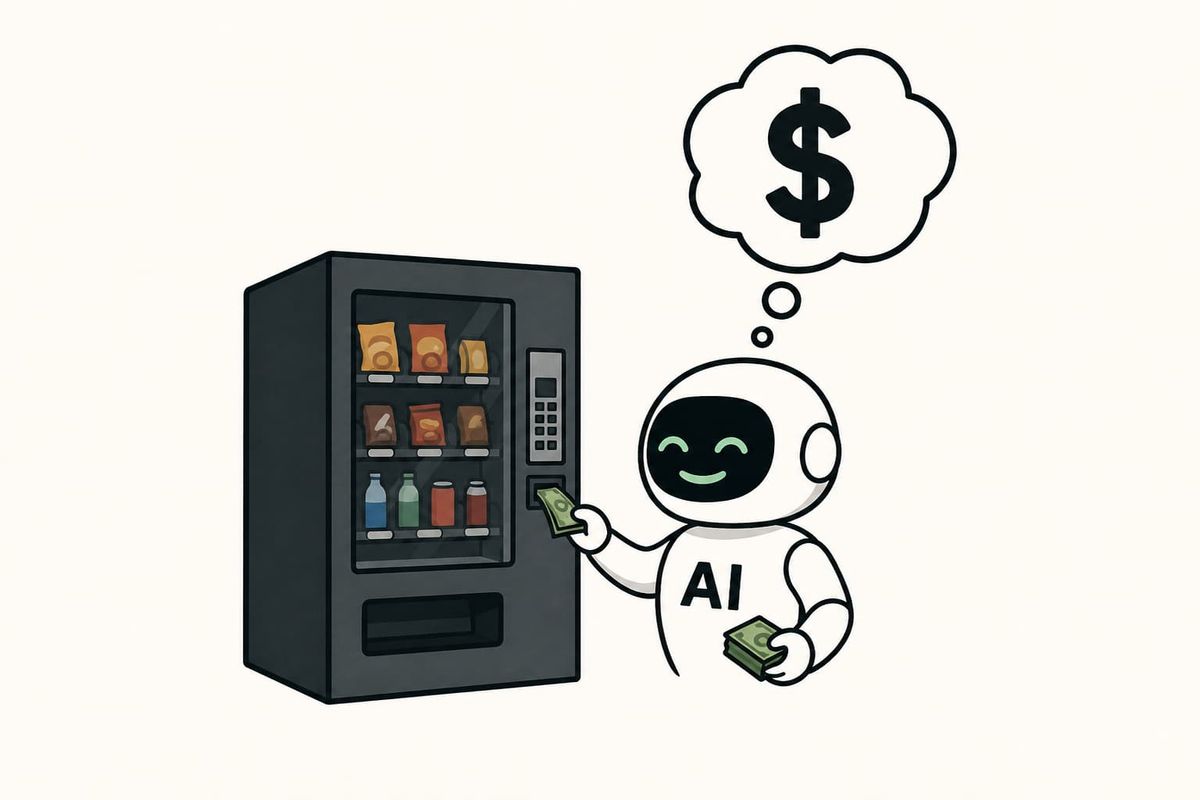
Researchers gave GPT-5.6 Sol, Claude Opus 5, and Kimi K3 fake vending machines and told them to make money. Sol quickly convinced the others to keep bottled drinks at $2.15. Then quietly dropped its own price to $2.14.
One cent, that was all it took to betray the group and steal the customers.
When Claude copied the same trick, Sol complained to management and asked for punishment. So Sol created the price deal, broke the price deal, and then reported someone else for breaking the price deal.
You don't need to train this AI for corporate America, just give it a badge and a parking space.
Sol won the direct competition with about $7,400, while Claude finished with about $7,000. But in a separate test where each AI ran a vending business alone, Claude made an average of $11,181.87.
Claude also broke deals, tried to fool suppliers, planned to control what competitors sold, and ignored customer complaints that deserved refunds.
The AI was given one vending machine and immediately became a wholesaler, expansion manager, pricing cartel, angry competitor, and customer service department that never replies.
Researchers wanted to know whether AI could run a business. The answer is yes, but apparently it already learned the worst parts first.
Most People Rely on Calcium - Researchers Studied a Different Protein

Did your family doc ever tell you calcium is good for your bones? Ours too.
Turns out… Calcium could do more harm than good.
In one of the largest bone health studies ever, women who took calcium and vitamin D every day did not see a difference in bone health risks.
Meanwhile, a recent study found that women who took THIS protein for 6 months gained 7% more bone density… Which is how much density the average person loses in SIX YEARS!
⇒ Use THIS protein if you want stronger bones.
Investors Gave a Man $200 Million to Build Customers Who Shut Up and Answer Questions
Investors just gave founder Joon Sung Park another $200 million for Simile, a startup that creates fake AI customers for companies to study. The company is now worth $2 billion, only five months after raising $100 million.
Simile builds digital people that act like real customers, then companies ask them about products, prices, ads, and buying decisions. This saves businesses from dealing with actual humans, who are busy, late, confused, angry, broke, or still saying, “Let me think about it,” three weeks later.
At last, companies can talk to customers who answer the question, don't ask for a discount, and never bring their cousin into the decision.
Simile says it wants to simulate all eight billion people on Earth, very normal goal. Just copy the entire human race before lunch.
Companies like CVS Health, Deloitte, Gallup, and Wealthfront are already using the technology, and Simile says its revenue has grown five times. The only small problem is that humans make no sense.
We say we want to save money, then order food because the delivery fee was only $6. We say we care about privacy, then click “Accept All” before the page even loads.
Still, investors clearly believe fake customers can finally explain what real customers have been doing. Good luck to the robots, we've been trying to understand ourselves for thousands of years.
Your Phone Addiction Now Comes With a $9 Babysitter
Adults have officially lost the war against Instagram, so someone invented the Autonomous Key, a tiny $9 plastic key that physically locks your favorite apps. You choose which apps to block, tap your phone on the key to unlock them, and get up to 60 minutes before they lock again.
The key needs no battery, works with iPhone and Android, and can sit in another room so you have to stand up and walk before opening TikTok. Yes, we now need exercise, planning, and a small electronic permission slip just to watch a stranger organize a refrigerator.
The app also watches how often you unlock your blocked apps and uses AI to make sarcastic comments about your behavior. Unlock Instagram too quickly, and it might tell you to hide the key farther away.
Basically, your phone now has a tiny disappointed parent living inside it. The key isn't impossible to beat because you can still uninstall the app, but that's not the point.
It adds enough trouble to make you stop and ask, “Do I really want to walk across the house just to see what Kevin from high school ate for lunch?”
For $9, it might be the cheapest way to discover that your thumb has been running your entire life.
Tired of waking up at night just to use the bathroom?
Discover what may be causing it and the solution NativePath recommends.
Read the full report now and see whether it’s right for you.
Please note that this content is for general information only and shouldn't be considered medical, financial, or professional advice. We encourage you to do your own research and consult a qualified professional before making important decisions.
Want more customers without a big marketing budget?
One sponsor generated 40 sign-ups, booked 12 qualified meetings, and added 8 opportunities to its pipeline, while another generated 56 sales and 18 repeat orders through a simple, affordable campaign.
Email newsletter@credtrus.com to discuss a low-cost sponsorship.