These Founders Want the Status Without the Company


12-minute, 27-second read.
This Week:
- Your doctor could be hearing about weight loss drugs from a doctor paid by the drug company
- If you take Tylenol you need to read this
- Your college degree is not helping you find work like it used to
- You’re underpaid and still acting like it’s a weather problem
- Imagine being so good at your job that companies fight over you
- Your doctor told you to take calcium, but did they tell you about collagen?
- AI workers are making money so fast they don't know what to do with it
- Your experience might be worth more than you think
- Silicon Valley finally has a name for fake founder energy
- If your doctor asked how many times you wake up to pee would you know the answer?
Your Doctor Could Be Hearing About Weight Loss Drugs From a Doctor Paid by the Drug Company
The next time your doctor talks to you about Ozempic, Wegovy, Mounjaro, or Zepbound, here's something worth knowing.
Drug companies have spent more than $270 million since 2018 promoting GLP-1 drugs through payments and benefits to doctors and other prescribers.
One Texas family doctor, Carlos Campos, received nearly $1 million over seven years connected to these drugs, much of it for speaking to other healthcare professionals.
He compared himself to an evangelical preacher man and said he helps sell the science. Another doctor received about $1.2 million.
So picture this. You're sitting on that little paper-covered bed in your doctor’s office, wearing the world's least flattering gown, asking whether one of these drugs is right for you.
Your doctor might have learned about that same drug from another doctor who was paid very well by the company selling it, that doesn't mean the advice is wrong. But suddenly the conversation feels a little closer to your wallet, your body, and your medicine cabinet.
The payments are legal and publicly disclosed.
The doctors say they're being paid to teach real medical science, not to simply push prescriptions. Drug companies say these programs help doctors understand new treatments.
Critics worry that when someone is getting hundreds of thousands of dollars from a drug company, staying completely neutral can get a little complicated.
And that's the part you have to think about the next time a new drug comes up in your doctor’s office. Is this simply doctors teaching doctors about medicine that works, or would you want to know who paid the person teaching your doctor about the drug being recommended to you?
GLP-1 drugs have become so huge that there's now serious money in making them, selling them, prescribing them, and even teaching your doctor about them.
If You Take Tylenol You Need to Read This
If you take Tylenol for headaches, back pain, sore muscles, or pretty much anything that hurts, this is worth a few minutes of your time.
Tylenol is all over the news right now.
And that’s a little awkward because most of us take it without thinking twice.
Headache? Tylenol.
Back hurts? Tylenol.
Wake up feeling like you lost a fight in your sleep? Tylenol again.
But with all the attention around Tylenol right now, people are asking more questions about what they’re taking and what other options are out there.
We put together a quick breakdown of what’s happening, what you should know, and the alternative getting attention.
See what you should know before taking your next Tylenol. →
Your College Degree Is Not Helping You Find Work Like It Used To
If you have a college degree and you're struggling to find work right now, this story is about you. You did what you were told to do.
You went to college, spent four years studying, probably took on debt, graduated, fixed your résumé, cleaned up your LinkedIn and started applying.
The deal was supposed to be simple, get the degree and you get the better shot at a job. But that advantage isn't working the way it used to.
New research from the Burning Glass Institute found that Americans ages 22 to 34 without college degrees are having one of their strongest job markets in about 20 years.
At the same time, young college graduates are having a much harder time getting hired, including some people with advanced science and technology degrees.
College graduates still have lower unemployment overall, so your diploma is not useless. But if you're wondering why finding a job feels harder than you were promised, you're not imagining the shift.
Maybe you're sitting at home sending application number 83 while your friend who never went to college is already at work. Maybe you have student loan payments coming up while your electrician friend is complaining that he has too much work.
You have the degree, the internship, the polished résumé and the LinkedIn photo where you look like you're about to announce a merger. He has a toolbox and a full schedule.
Again, the data doesn't say college is a bad choice. It says something more uncomfortable.
The job advantage you thought your degree guaranteed is getting weaker, but many young people without degrees are seeing some of their best job conditions in years.
If you were choosing your path again today, would you still make the same bet?
You’re Underpaid and Still Acting Like It’s a Weather Problem
You complain about your salary.
You check LinkedIn.
You see somebody with half your experience making more than you.
You get angry.
Then you go right back to work.
Your employer is not going to wake up one morning and say, “You know what? Let’s randomly give this person 40% more money.”
If you think you’re worth more, test it.
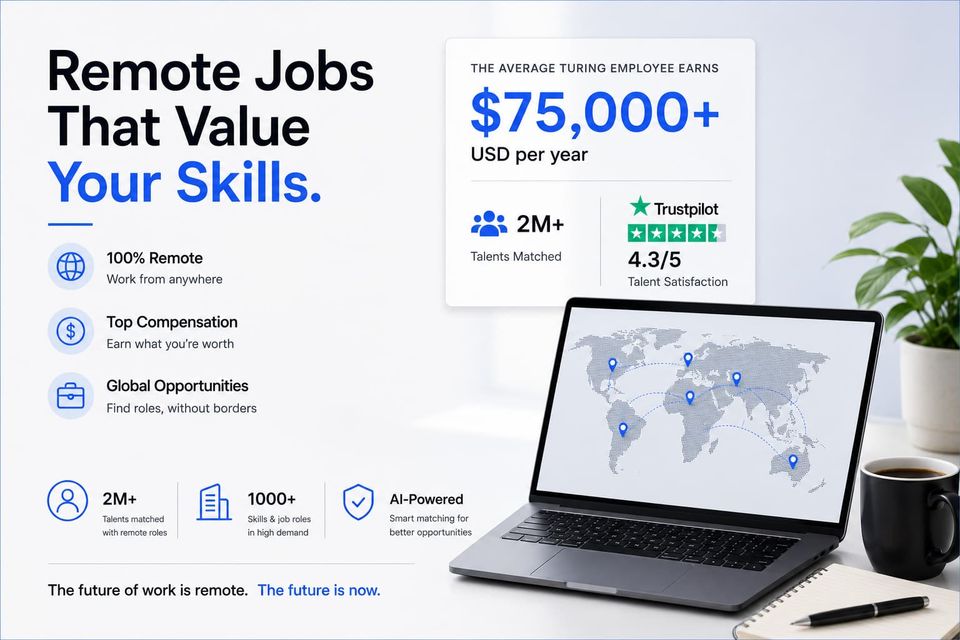
Turing connects skilled people with remote US opportunities across software, AI, data, analytics, and other technical fields.
Maybe you’re underpaid.
Maybe you’re not.
But complaining without checking is just expensive guessing.
Go find out what someone else would pay you. →
Imagine Being So Good at Your Job That Companies Fight Over You
You probably don't know Andrew Tulloch. That's fine, most people don't.
Tulloch is one of the most wanted AI researchers in the world.
Meta once reportedly discussed a pay package for him that could have been worth more than $1.5 billion over several years if bonuses hit and Meta stock went crazy.
He later joined Meta on private terms, stayed less than a year, and is now leaving for Anthropic.
This isn't really a story about some AI guy you've never heard of, it's a story about what happens when the market decides your skills are rare enough that companies are scared to lose you.
Tulloch can leave one giant company and another giant company is waiting.
Most workers leave one job and immediately start refreshing LinkedIn like they're checking lottery numbers.
If you disappeared from your job tomorrow, would your company panic, or would someone just reset your password by lunch?
Somewhere right now, companies are fighting over a tiny group of people, and the rest of us are being told there's no money for a raise after rent, groceries, gas, and everything else already went up.
Your Doctor Told You to Take Calcium, but Did They Tell You About Collagen?
If your doctor has ever told you to keep your bones strong, you probably heard one thing: Take calcium.
So you did.
Because you want your bones strong enough to keep doing normal life.
Getting out of bed, walking up stairs, carrying groceries, and hopefully never having one bad fall change everything.
But your bones aren’t just calcium, collagen is part of the structure that helps give your bones strength and flexibility.
And researchers are studying what that could mean as you get older.
So if you’ve been taking calcium for years thinking that was the whole story, there’s something else you should know.
Before you take your next calcium pill, read this. →
AI Workers Are Making Money So Fast They Don't Know What to Do With It
AI is making some people rich so fast that wealth managers say researchers and developers are now calling because they suddenly need help figuring out what to do with the money.
Goldman Sachs says it has seen a huge jump in inquiries from founders, investors, researchers, and developers facing life-changing financial decisions.
The big difference is that this is not only about CEOs and founders anymore, it's reaching employees at fast-growing AI and tech companies who got valuable stock as part of their pay.
Some of those workers are now sitting on millions because their companies became much more valuable or gave employees a chance to sell shares.
So the person fixing bugs, building models, or sitting three seats away from the founder might now be asking a wealth manager whether to sell stock, how much tax they owe, how much to invest, and whether they can afford to stop working.
These are not all famous people whose lives look nothing like yours. Some are regular employees who joined the right company, got stock, and happened to be standing in the right place when AI valuations exploded.
One worker might be deciding whether to cash out millions, but another person with a similar job title is checking whether this month’s paycheck can survive rent, groceries, and the credit card bill.
This is happening at the same time some AI jobs are offering salaries in the $500,000 to $850,000 range and experts are being paid hundreds of dollars an hour for specialized knowledge.
That doesn't mean every developer is about to become rich, most won't.
But it does mean the money is spreading beyond the founders at the very top.
The uncomfortable question is whether this is just a small group getting very lucky, or whether you're watching one of those rare career money waves happen in real time and telling yourself you will look into it later.
Your Experience Might Be Worth More Than You Think
If you work in software, medicine, law, math, science, or research, AI companies are now paying experts to train models, test answers, find mistakes, and build harder questions.
Some lawyers working through Mercor and Micro1 have reported earning about $100 to $200 an hour on AI training projects.
Turing is also hiring engineers, doctors, researchers, and other STEM experts for remote AI work, including flexible projects and full-time roles.
For a lot of people, this is not a career change. It's simply a new way to get paid for knowledge they already have.
See what your experience could be worth. →
Silicon Valley Finally Has a Name for Fake Founder Energy
You probably know this person, maybe you follow them, maybe you work with them or maybe, on a bad day, you are them.
Their bio says founder.
Their alarm goes off at 4:30 a.m. They post about working 996, meaning 9 a.m. to 9 p.m. six days a week. They quote startup essays like scripture, post photos from WeWork, and somehow find three hours a day to tell the internet how little time they waste.
Silicon Valley now has a name for this: a LARPing founder, basically someone who looks very busy being an entrepreneur but spends more time performing the role than building the company.
LARP stands for live-action role-playing, a hobby where people physically dress up, take on fictional characters, and act out a made-up world in real life.
One joke that spread online imagined ten founders renting a mansion in Bali, hiring a private chef, working out together, and announcing they were going to 10X revenue in 30 days.
Nothing says we're fighting for survival like a chef waiting downstairs while you post about sacrifice, the joke is hitting a nerve because it's getting harder to tell who is actually building something and who just has better founder content.
Y Combinator CEO Garry Tan has even told founders, “Be earnest, don’t larp.” Search interest in LARP was also reported to be up about 200% from a year earlier.
The founder you see online might have the early mornings, the airport photos, the we’re hiring posts, the startup dinners, the long threads about discipline, and the dramatic story about betting everything on the company.
But are customers actually paying them?
The person you barely notice, the one who isn't posting from Bali or telling you how exhausted they are, might quietly have the better business.
If Your Doctor Asked How Many Times You Wake Up to Pee Would You Know the Answer?
Once might not get your attention.
Twice starts getting annoying.
By the third trip, you know exactly which floorboard squeaks on the way to the bathroom.
But waking up again and again to pee has a name: nocturia. And when it keeps happening, doctors don't automatically write it off as just getting older.
It can be connected to something simple, like drinking too much before bed. But frequent nighttime urination can also show up with bladder problems, an enlarged prostate, certain medications, diabetes, sleep problems, and other health issues.
Pay even closer attention if you're also dealing with a sudden strong urge to pee, leaking, trouble emptying your bladder, pain, or blood in your urine.
The bathroom trip is only half the problem. Every time you get up, your sleep gets interrupted too. Do that night after night and your bladder is now messing with tomorrow morning.
A new report breaks down three bladder warning signs worth paying attention to, what can cause them, and when it might be time to talk to your doctor.
You already know where the bathroom is.
Now find out why you keep going there, read the report. →
Please note that this content is for general information only and shouldn't be considered medical, financial, or professional advice. We encourage you to do your own research and consult a qualified professional before making important decisions.
Want to sponsor the newsletter like Turing and NativePath? Email matimba@credtrus.com